Solar PV Overview
Solar cells, also called photovoltaic (PV) cells by scientists, convert sunlight directly into electricity. PV gets its name from the process of converting light (photons) to electricity (voltage), which is called the PV effect. Solar panels used to power businesses are typically made from solar cells combined into modules that hold about 40 cells. The panels are mounted at a fixed angle facing south, or they can be mounted on a tracking device that follows the sun, allowing them to capture the most sunlight. Many solar panels combined together to create one system is called a solar array. For large electric utility or industrial applications, hundreds of solar arrays are interconnected to form a large utility-scale PV system. Traditional solar cells which are made from silicon, are usually flat-panel, and generally are the most efficient. This PV cell technology is the most prevalent in the market, with a life expectance of 30-plus years. Second-generation solar cells are called thin-film solar cells because they are made from amorphous silicon or non-silicon materials such as cadmium telluride. Thin film solar cells use layers of semiconductor materials only a few micrometers thick and can be applied in a shingle t
For more details, visit the following site: http://www.masstech.org/cleanenergy/solar/technology.htm
 click to enlarge
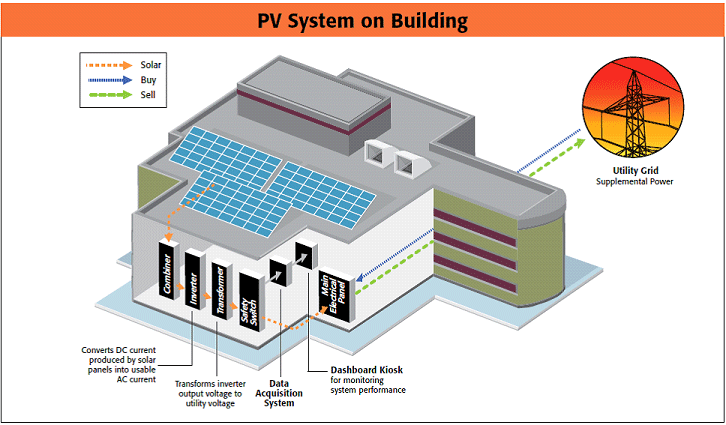
The figure (right) depicts how a PV Systems works on a building. The solar cells on top of the building capture solar energy which is then collected and packages via a combiner. The energy is then changed from DC power to AC power via an inverter. Next, it is transformed into usable utility grade voltage and sent to the main electrical panel. Along the way it passed through safety switches and a monitoring system. The orange line shows the path of the energy from the sun while the blue line show payment of electricity from the grid and the green line shows the selling of electricity back to the utility grid via Net Metering and the accumulation of SRECs for later sale back to the utility.